Colour coded kitchens help to reduce any potential risks to the health of customers. Not only does using colour coded kitchen utensils and equipment make life in a busy kitchen simpler but it is essential for good kitchen health and safety. Investing in a colour coded kitchen and food preparation system is both easy and affordable.
Whilst there are no hard rules about what colour should be used for what, the recommended guidelines are as follows:
It is worth noting that kitchen staff may have used a different colour coding system previously, so it’s always a good idea to have your colour code chart on display.


There is a vast choice of colour coded kitchen utensils, all of which will help to improve the safety of food preparation and reduce the risk of contamination. Using a variety of different colours helps to easily identify which ones are for which use and can also make life easier for chefs in a busy kitchen. In light of this, you should have a functional assortment of colour coded kitchen tools in your kitchen.
It’s important to have a range of kitchen utensils and equipment in the matching colours. There would be no point separating raw fish onto a blue chopping board and cheese onto a white board and then using the same knife to cut both! This means that it is important to consider coloured chopping boards, knives, tongs and other utensils to help prevent contamination.
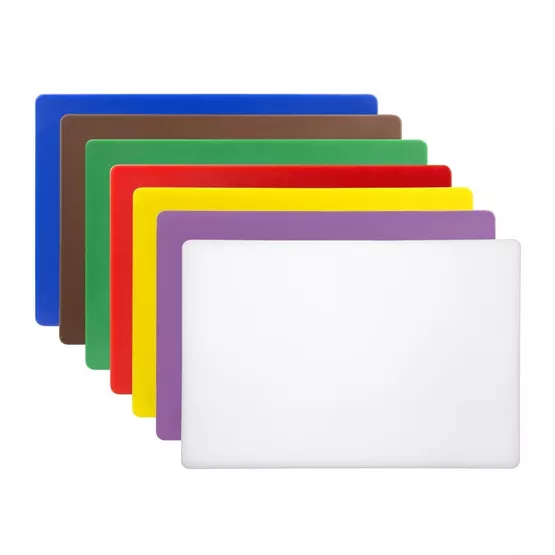
Most people are already familiar with coloured chopping boards, but may not understand why they should be used as standard practice. They have been designed to prevent cross-contamination between different ingredients. Isolating them from each other on specific coloured chopping boards, for example, raw meat on a red board and raw vegetables on a brown board, prevents this from happening.
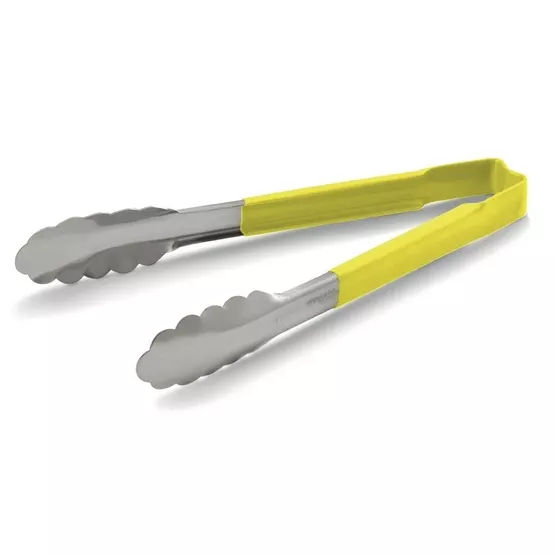
It is possible to have a wide range of colour coded kitchen utensils. Tongs are one of the most commonly used in a kitchen, which puts them at a much higher risk of being contaminated with something else. Coloured kitchen tongs implement good health and hygiene practices and ensures the safe transference of foods.
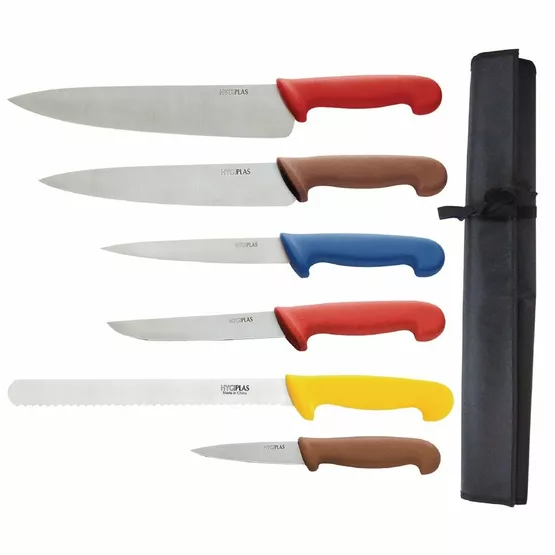
As with the colour coded chopping boards, it makes perfect sense to introduce coloured knives to match. It will definitely make things a little easier during a busy food service, plus colour coded kitchen knives will help you to identify the correct type of knife for the task in hand.
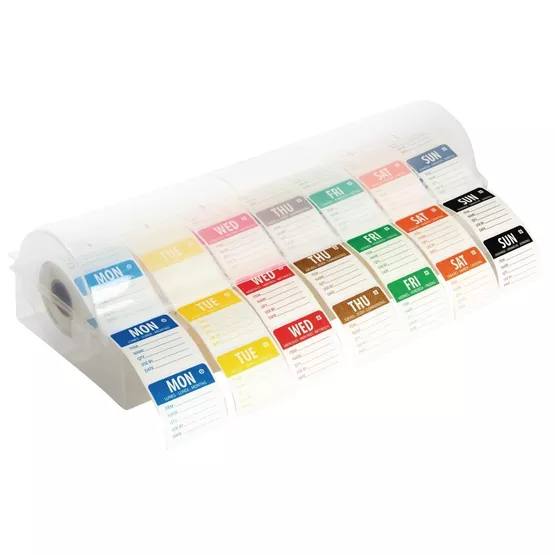
Coloured food labels, a different colour for each day of the week, makes food rotation and identifying stored food a lot easier. Rather than going through to read the days printed on each label, coloured day labels will help you to simply find what you need, saving you time and ensuring that your stock is fresh and in the best consumable condition.

You are probably familiar with and undertaking HACCP - Hazard Analysis and Critical Control Points. This involves identifying and understanding potential health risks in your kitchen and taking steps to eliminate them.
During an inspection Food Standards Enforcement Officers will want to see examples of good HACCP systems and practices. Proving that you use one set of coloured tongs for salad (green) and another for raw chicken (red) recognises your appreciation for the risk of contamination and taking steps to avoid it. Therefore, colour coded kitchen equipment is key to a successful Food Standards inspection.

You may think it unnecessary to request an experienced chef to use different coloured knives and equipment, particularly during a quiet service. However, contamination can happen anywhere at any time and it is always best practice to use colour coding. Not only does it improve your kitchen’s safety and hygiene levels but it’s also extremely convenient too and can help to keep things running smoothly even at the busiest of times.
Sources: https://www.nisbets.co.uk/colourcodingitems